
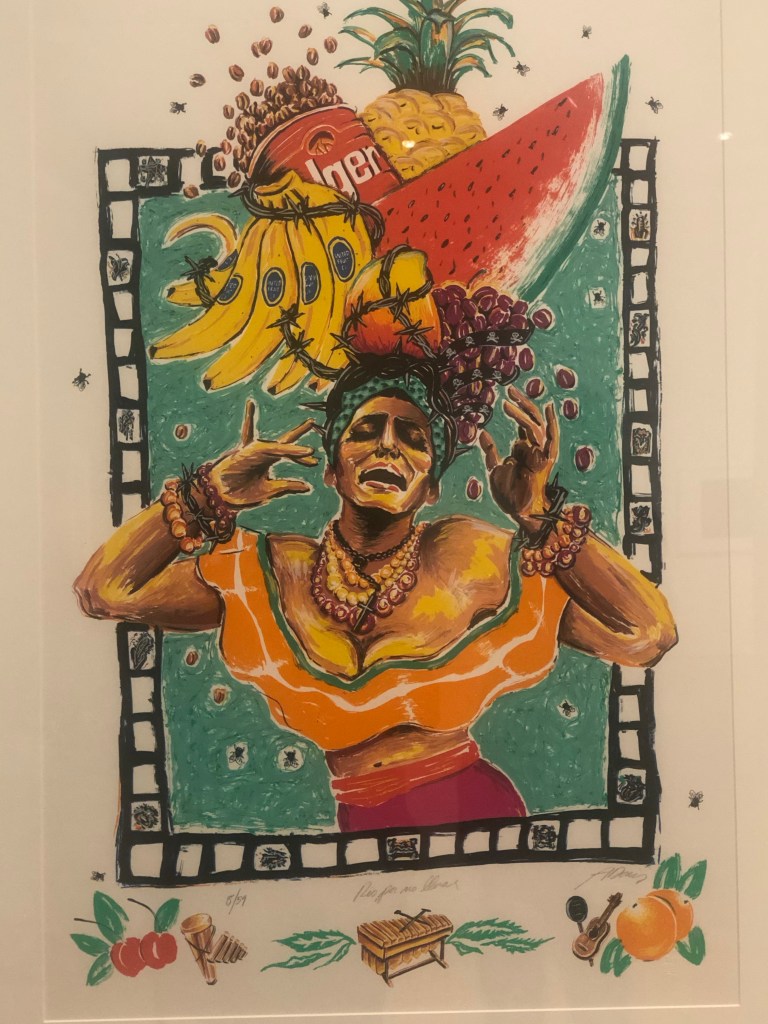
A month ago, I was sitting in my colonialism and imperialism course, nearly slamming my hands on my desk, and trying to control my voice as I said, “Mixed people will not save us!” At the time, we were reading Gloria Anzaldua’s Borderlands/La Frontera: The New Mestiza and I was, very apparently, struggling to digest Anzaldua’s opinions on the strengths of racial mestizaje (this work, largely about deconstructing the boundaries between cultures, sexual identities, gender performance, and the physical borders between geographic spaces envisions mestizaje as a way of living on the constructed borders of any of these identities). It seemed to me that Anzaldua believed a future without borders or nations rested heavily on breaking down racial barriers and racially mixed people, then, would be the people best positioned to herald this new age of global humanism.
(Which, to me, is bullshit.)
The West, and particularly the U.S., has fully embraced the idea that there is something inherently noble about being mixed. You can see this evangelism of the racially blended identity at work across some of our favorite pop culture; it’s ingrained in the way we romanticize President Obama, part of the major narrative arcs of Severus Snape, Miles Morales, and Sabrina the teenage witch (and I think there’s something there about all three of them being magical that’s worth examining).
What I know from my anecdotal experience as a person who is Puerto Rican (a place that is multi-generationally mixed and holds up this mixedness as a part of its national identity) is that mestizaje is often used to make Black people/Blackness/Black ancestry invisible and irrelevant. In Latin America, some of the biggest proponents of mestizaje as a national project were eugenicists, employing mestizaje for the very purpose of culturally and physically eradicating Blackness.
So it surprised me then, when writing a review of the Blanton’s museum’s current exhibition, Arte Sin Fronteras that I felt Borderlands/La Frontera: The New Mestiza and notably Anzaldua’s concept of mestizaje were the perfect vehicles for thinking about and contextualizing the works.
In an effort not to give it all away, I’ll say that I’ve linked to this review on this site under the Elsewhere tab, listed along with my other editorial writings. I will, however, end by saying that Arte Sin Fronteras helped me think about how Borderlands/La Frontera: The New Mestiza is about more than the myth of the magic mulatto and for that, I’m grateful. The exhibition also gave me a chance to think about how–as Black people, people of the Black diaspora and otherwise folks of color–we create our theoretical frameworks in music, stories, and visual art; I love that about us.
 subvert and worship
Leave a comment