
Driving home earlier, Cornerstone by the Arctic Monkeys came on my playlist and I remembered how the summer just before Tito died, I thought I could fall in love with a young man who reminded me of him. The young man, a bartender like Tito, had just crashed his motorcycle when I met him. So he was a biker like Tito. He wore black skinny jeans and cuffed them at the ankles like Tito. And like Tito, he had a small son. He had just been arrested months before for punching a cop downtown while his pockets were full of molly. Something about that unpredictable mayhem that circled him like flies examining a bowl of sugar reminded me of Tito. It wasn’t quite the same, but as the song goes, “close enough to be your ghost.”
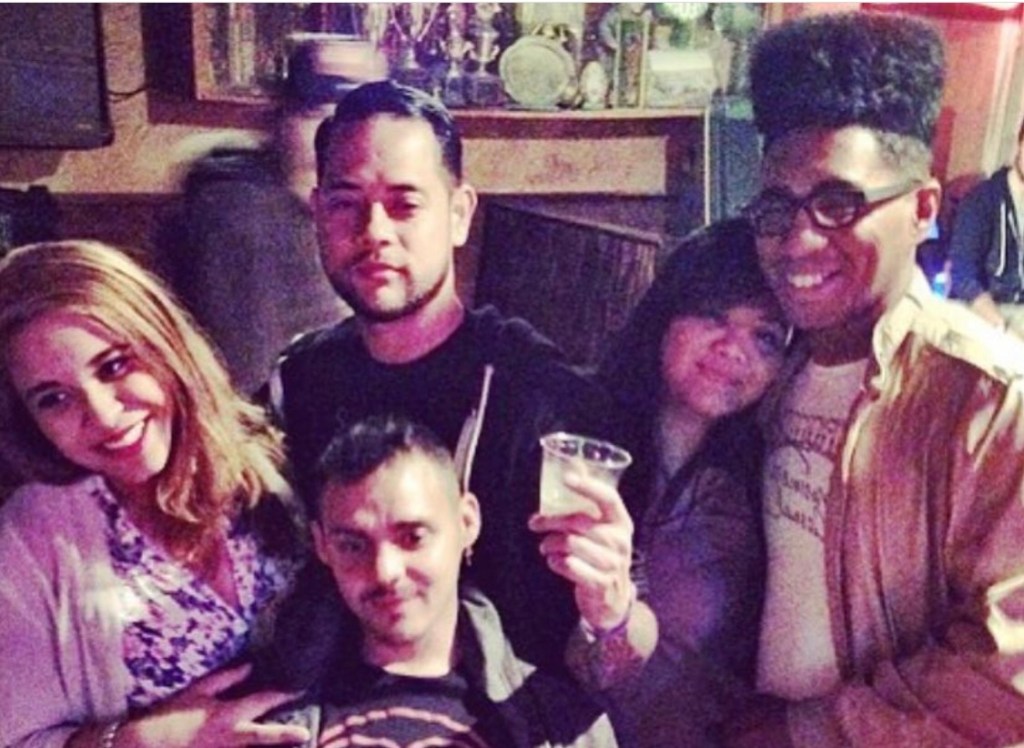
When I met Tito, it was the summer that I turned 27 and my friend, Janice, asked me to come out with her and show a group of her childhood friends out on the town. The three guys rode into Austin like bats out of hell; the air around them was electric and the aura around them—dazzling and seductive—was purely chaotic.
We took the wildlings to Nasty’s where we threw back shots and danced to Ghost Town DJs under the dirty panties stapled to the ceiling. We sat at a patio bar and passed around someone’s vape pen. We ate kimchi rice and chicken thighs with our fingers behind the Liberty. We shouted over each other in the car, in every bar, and finally at Magnolia Cafe at 4 am. I had a bowl of bow tie pasta with cherry tomatoes and pesto. One of the boys, scarfing down pancakes with heavy eyelids, rubbed his left hand up and down my thigh under the table. It was one of those dizzying nights that’s stayed with me—its blurry carousel memories preserved in my mind like pressed flowers—for the last six years, in no small part because of Tito.
I can’t explain the spirit of this man except to say he was more mountain than human. He owned a bike shop that doubled as a bar in the evenings and organized these hipster bike marathons from San Antonio to Fredericksburg every summer. He was the sort of person you could sense would give you the shoes off of his feet if you asked. To be around him was to feel like anything was possible, maybe even probable. I’ve never met anyone like that and after that night, never saw him again. But we (myself and the whole feral boy crew) kept in touch online.
Online, I’d see photos of them: wearing their tweed jackets and riding their restored vintage bikes in downtown San Antonio; raising money when the bar/bike shop was vandalized, robbed, or scammed; passing out plates of ribs they grilled themselves in the shop’s yard; cliff diving in Costa Rica; snorkeling in the Philippines; catching silver-scaled fish in Peru or Honduras. And somehow I knew that whatever I felt—that untamed kinetic charge that surrounded Tito—was something everyone could feel. Even though I didn’t know him, I loved that about him, fiercely. I didn’t know anyone capable of so universally moving people just by walking by.
It was a Tuesday in March 2019 when I heard that Tito was in critical condition after a drunk driver hit him while he was riding home on his bike. I was in a staff meeting, and because I wasn’t supposed to be checking social media, when I saw the news, I swallowed it down into the pit of my stomach. It tasted like bile. I couldn’t keep the tears from coming. The grief I felt was inexplicable.
He passed away a couple of days later.
Over the next few weeks, tens of thousands of dollars in web-based donations poured in for Tito’s small son. Murals went up. The local university named a bike trail and cycle repair shop for Tito. A ghost bike became a site of collective mourning. There were multiple bike rides where hundreds of people wore black and rode Tito’s path from his shop to his home. People got tattoos of his name or his face on their fingers, thighs, and chests. I watched it all and felt silly loving him as I did even though I can’t say I knew him.
But sometimes still, I scroll his social media pages and see that they’re rife with stories like mine. Someone he gave his last 60 bucks to and never saw again. Someone who only knew him by crossing his path every day on their way to work. Someone who was a friend of a friend, like me, and was moved by a brief encounter. Maybe he was an imaginary boyfriend for quite a few us.
I’d buried my secret grief until Cornerstone came on, reminding me of the man who loomed so large in my mind but who’s evidence of ever being a presence in my life was ephemeral: there’s a single photo from that night and we are standing the furthest apart we could possibly have.
 subvert and worship
Leave a comment