“You’re on a train, Lauren, and your fear—instead of being something inside of you—exists outside of your body. Imagine it now. What do you see?”
I closed my eyes and imagined myself on the D.C. metro. I scrunched my eyelids together, hoping the pressure would force me to visualize something. “I’m…I’m just having a hard time picturing it.” I let out a frustrated sigh.
My therapist was patient. “Let’s try one more time. Don’t force it. Try imagining that your fear is something that lives outside of you and has a tangible presence. Can you see it?”
I tried to imagine my fear as another passenger on the metro, a muted specter with her head in her hands, shoulders rising and falling with her sobbing.
“Okay, it’s like a ghost. It’s crying.”
“And what would you say to it?”
“Uhh.” Even with the vision in my mind, I was finding this silly. I couldn’t get over how stupid I felt. “I’m just…I’m really having a hard time with this exercise.”
“It’s maybe a little experimental. If it feels weird, let’s move on.”
And so we did.
This was in the fall of 2021 and my therapist was guiding me through a “parts therapy” exercise (admittedly with a lot of rigidity on my end). I don’t particularly care to get into the specific basis of my fear then–as consuming as it was at the time, it has nothing to do with my life now. Though I’ve since relegated those circumstances to an unattended graveyard of things that no longer concern me, the spectral presence they have cast across my life is a long shadow, indeed. In the time since, I still sometimes struggle with the feeling of not being enough (as in: maybe if I were skinnier, less busy, smarter, harder working, more easygoing, less shy, more into BDSM–then none of this would have happened).
In spite of the silly place where that feeling started, it spread well into this year. It touched parts of my life it had no business touching. And so it was that for the better part of 2022, my comprehensive exam essays languished on my laptop. Which isn’t to say that over the course of the year, I made no progress on them, but that in that time, I really struggled with organizing my ideas and making the sort of cohesive changes that really would have pushed those essays forward toward completion.
By October, I had started to look toward other ways of measuring my productivity for the year. Beyond my academic work, I hadn’t published any public writing since the fall of 2021. I thought if I could publish in the months left of 2022, I’d feel better. But even my pitches that were accepted left me feeling like less of a “real” writer: most mornings that month, I woke up early to chip away at a story pitch about a couple of scary movies and found myself plunging my central argument into holes about Derrida, Toni Morrison, and my childhood. That story stayed in my files–a similar meandering mess as my exams essays–for weeks. At this critical juncture, my therapist went on maternity leave. Though I assured her (and attempted to assure myself) that I would be okay, the truth is I was scared.
In November, I was nearing the critical hour: the idea of moving into the spring semester without completing my exams essays felt impossible–surely there would be repercussions in my department, not to mention the toll it was taking on me to have them looming so large in my mind. Still, night after night, I’d open my laptop and sit in front of its glowing, blue light feeling paralyzed. On one such November night, I decided to pull my tarot cards with the hope of foreseeing all my impending academic woes ahead of me and bracing for them.
I reached for Jessica Dore’s book, Tarot for Change, after pulling three cards. Immediately, I recognized the first card, the five of coins, as a warning about my forthcoming failure. (For the uninitiated, the five of coins card in the Rider-Waite-Smith deck depicts two destitute and disabled people slogging through a snowstorm. Behind them, the stained glass window of a church radiates warmth. There is no door to the church visible, though, so our subjects are consigned to the harsh weather.) When I opened Dore’s text to the section on the five of coins card, she wrote about the possibilities that might open up for us if we invite in the parts of ourselves that we most fear. What if, rather than banishing them, we invited them inside by the fire and acknowledged them and the good things that come with them?
I remembered the parts therapy exercise my therapist attempted with me a year before and exhaled deeply. I still felt really silly, but decided anyway that it was worth the try. I closed my eyes and again imagined myself on the D.C. metro–the same metro rail I rode alone in my twenties when I’d visit my dad for Christmas break. My fear still presented herself to me as a ghost. This time, we were riding on opposite sides of the metro and I stood up, crossed the train, and sat down in the seat beside her. She didn’t stop crying or even look up to acknowledge my presence beside her, so I put my hand on her shoulders. I felt my hand rise with her sobs.
“That’s okay, you don’t have to stop. I just wanted to tell you that I’m glad you’re here. I know you don’t believe me because I feel frustrated with you sometimes, like when I can’t organize my thoughts, but I know you’re here to protect me. I think I first brought you around to help me a long time ago when I felt scared I might fail: like, if I acknowledged that I could and probably would fail, I could anticipate how failure would feel. And if I planned for it, when I failed, it wouldn’t hurt so much. That has really helped me a lot and some of the time, I have really felt protected by you.”
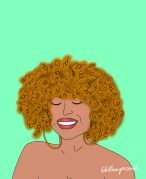
I placed one hand on her knee to emphasize this next part: “Thank you for protecting me. Thank you for showing up for me every time I needed to scale something scary.” I felt her shoulders stop rising and realized that her sobs were now just sniffles. I moved my hand from her shoulders and ran my fingers along the top of her hair. No one but my grandma ever touches my hair, and this sort of touch is instantly comforting.
“I think somewhere along the way, we got off track, though. Don’t you feel it? You used to help me plan for the worst case scenario, but lately I haven’t been progressing toward things that are important to me. I think you have a part to play in that–maybe somewhere deep down, we both believe that if I never try, I can never fail. And maybe I’ve been putting too much pressure on us, so you’re always here with me. I think it’s time for you to rest–you’ve earned it. Why don’t you get off on the next stop and take some time for yourself? I’ll call you again because I still need you to protect me sometimes, but right now, you can take a break.”
My fear nodded and wiped her eyes. She put her hand on mine that was resting on her knee. As the metro train slowed down, she gave my hand a squeeze and I squeezed back. When the metro stopped at Dupont Circle, she stood up, pushed the hair out of her face, and got off the metro. I turned to wave goodbye to her through the window as the train pulled away.
I opened my eyes. I was sitting in my bed, my laptop open and resting on a pillow across my thighs. My comps exams drafts blinked back at me from the screen. I felt silly, but I also felt lighter. I put a hand in my hair, remembering my own touch and felt something crack open inside of me. It’s cheesy, but I felt the space created by her absence and in that space, I felt like I could finish. I opened a new document and started my exams essays over. Two weeks later, I was finished. Not only had I moved on from those essays that hung over for me for a year, but I felt like I had the mental space to write again. A couple of nights after finishing my essays, I opened up my scary story pitch draft, deleted eighty percent of it, and started writing it anew. The editor loved my new draft and it’s on track for publication at the top of the new year.
None of this is to say that *you* should personify your coping mechanisms and leave them at the Dupont Circle Station, but if you’re feeling stuck like I was, maybe there’s something to acknowledging how your coping mechanisms have been useful (even if they’ve been harmful, too). I think what I like best about the exercise is that it gave me room to imagine having compassion for myself, even the parts I deem the worst parts of myself.
I saw my therapist for the first time since her maternal leave this week and told her about how I revisited this exercise and how it helped me. She was happy for me and said that one way therapists measure success is by their clients thinking about the therapist’s advice and implementing it. It felt good to know that our work together can be measured this way, because when I let my fear take up so much space, it feels like I have so little to show for 2022.
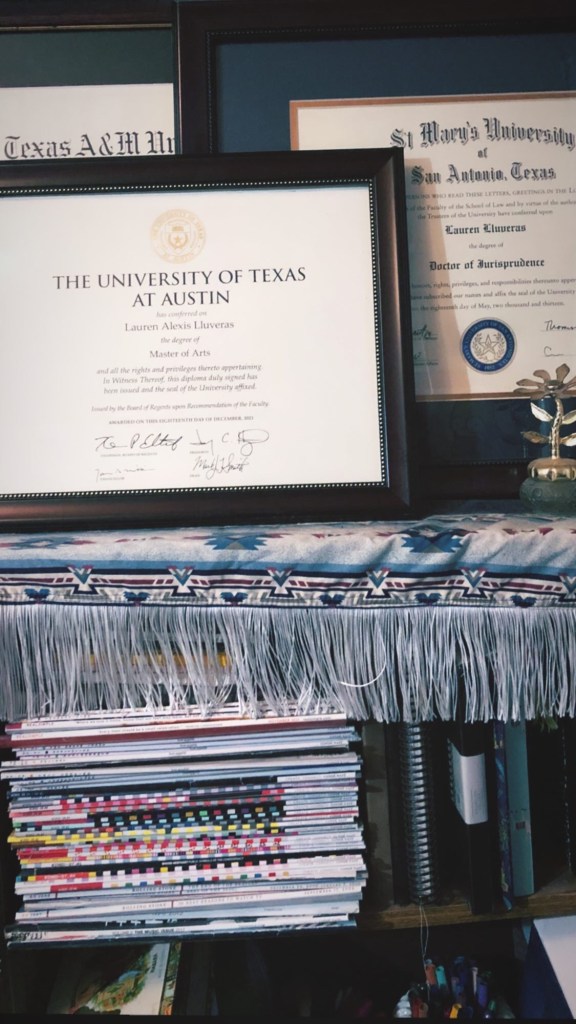
I know this is a lie. In 2022, I earned the fellowship I coveted at the Blanton Museum and was selected for a seat at the National Endowment for the Humanities Summer Institute on Afro-Latino Studies at the University of Pittsburgh. I was also awarded seats at the competitive Studio Museum Institute’s Museum Education Practicum and a defending democracy fellowship through the Western States Center. I wrote, and wrote, and wrote for the Texas RioGrande Legal Aid blog. It may have taken me longer than I liked, but I did complete my comps essays, after all.
In 2023, I will enter the second half of my museum education fellowship and start a new job that I’m excited for (as well as a new 10 hour role on campus). In the fall, I suspect I’ll have to return to teaching, but I believe I can juggle it. I love teaching, and so I’m excited to get back to it. I’ll enter candidacy next year and lay out a map of my dissertation project. I’ll publish at least the two essays I have lined up for the top of the year, but hopefully more. There’s so much to look forward to in the coming year.
Where I’ve been particularly hard on myself for feeling that I was academically stagnant in 2022, in the spirit of being kind to myself, I want to acknowledge the high premium I put on joy this year. I have really enjoyed working at the Blanton Museum; I saw my dad more than I have in any year over the last decade this year; and I spent a lot of time making Colby laugh (a thing I’m excited to do more of in 2023). I helped my friends celebrate their pregnancies, babies’ births, and new jobs. I connected with old friends and made new ones. I learned how to spend less time with people who are not nice to me. I kept my sweet Shakespeare alive for another year and am excited to see how much longer he’ll stay with me on this side of the veil. I watched more professional wrestling than I ever have. I sat down to dinner with Colby hundreds of times, and we found spots and meals that feel like ours. At least half of those meals took place at Colby’s kitchen table, where he’d learn how to make my favorite dishes and set them in front of me on days when he knew I needed a pick-me-up. One truly special meal he made this year was for my dad, where he learned to make Puerto Rican pernil for Thanksgiving and we sat around Colby’s kitchen table eating his roast, my tostones, and my sister in law’s arroz con gandules, all washed down with parcha y rum. I traveled more in 2022 than I have in recent memory, going to exotic places like Orlando and Seattle, and glamorous places like Las Vegas, and places that actually blew my mind like Pittsburgh and Chicago, and places where I feel the most home–like my grandmother’s patio.

 subvert and worship